
Care shaped around your constitution.
Acupuncture, therapeutic bodywork and rehabilitation, assessed by a qualified TCM physician and coordinated end to end.
Where TCM fits in what we do
Traditional Chinese medicine sits alongside the hospital care we coordinate, not instead of it. Every course begins with an assessment by a qualified TCM physician, who looks at your constitution, symptoms, existing diagnoses and current medicines before discussing what may be suitable.
We are not a clinic. Our role is to arrange the first consultation, schedule the physician appointment, interpret on site, coordinate the course timetable, and help you collect and understand the written instructions that come with any medicine.
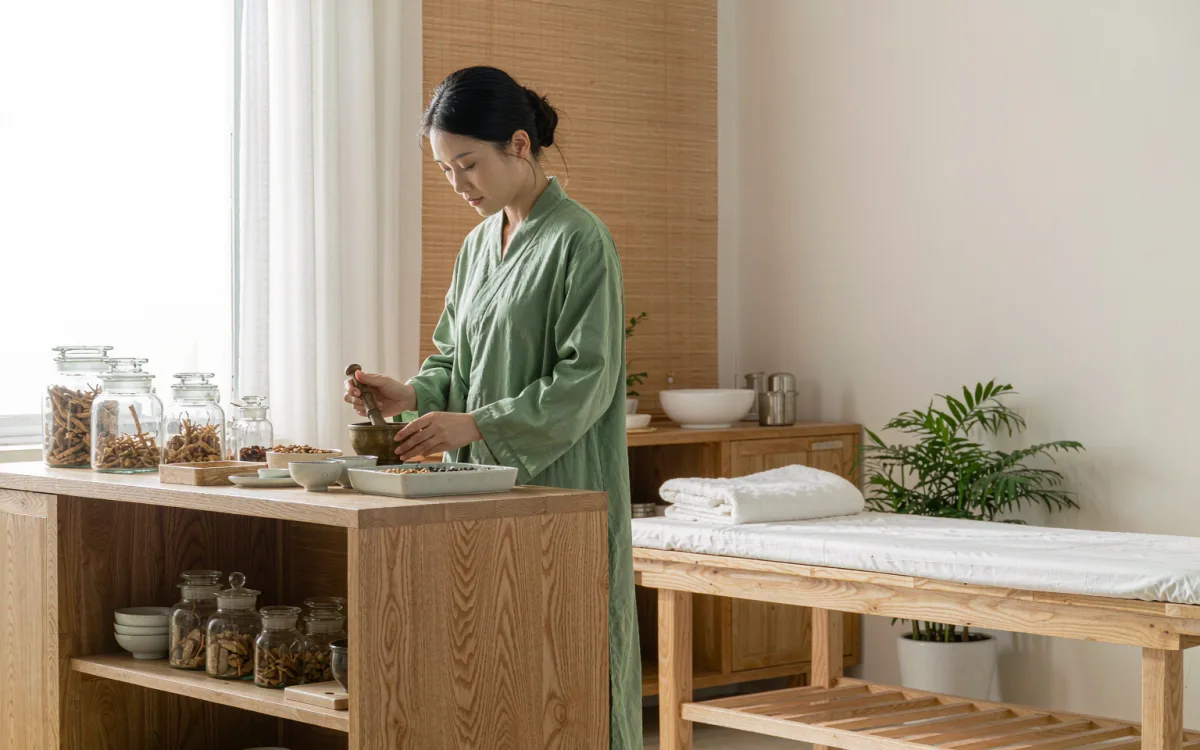
Traditional Chinese medicine
- Physician assessment
- Acupuncture & therapeutic massage
- Rehabilitation coordination
Therapy categories we can coordinate
These are the general categories a TCM physician may discuss with you. Which of them, if any, are appropriate is decided after assessment — none of them is offered as a fixed programme, and none carries a promise of a particular result.
Constitution assessment & pattern differentiation
The starting point of any TCM course. The physician reviews your symptoms, pulse, tongue, sleep, digestion, medical history and current medicines, and records a pattern differentiation as the basis for further discussion.
Acupuncture
Fine needles are placed at selected points by a licensed practitioner. It is commonly used in the care of musculoskeletal discomfort, headache and some functional complaints. Whether it is suitable, and where needles are placed, is decided by the practitioner.
Tuina (therapeutic bodywork)
Manual techniques applied to muscles, joints and soft tissue, including pressure along the meridians and joint mobilisation. Often chosen for neck, shoulder and back stiffness. Pressure and technique are adjusted by the practitioner.
Moxibustion
Heat from burning mugwort is applied on or near selected points. It is used in the care of cold-type patterns and some long-standing complaints. Burns and smoke sensitivity are possible, so suitability is assessed by the practitioner.
Cupping
Suction cups are placed on the skin for a short period. It is commonly used for tension in the back and shoulders. It leaves temporary marks on the skin and is not suitable for everyone.
Gua sha
A smooth-edged tool is drawn across lubricated skin, producing temporary superficial marking. It appears in some traditions as a way of working with tension and minor discomfort. Skin reactions vary between individuals.
Herbal steaming & external therapy
Warm herbal steam, washes, compresses or plasters applied to the skin. The formula, temperature and duration are set by the physician, who also reviews possible interactions with medicines you already take.
Rehabilitation therapy
Movement, stretching and physical-modality sessions arranged around a clinical rehabilitation plan. Where it follows surgery or injury, the plan is set by the treating clinician and delivered by the rehabilitation team.
What a course involves
A TCM physician reviews your symptoms, existing diagnoses and medicines before recommending a course. We coordinate appointments and interpretation. Ask about possible interactions, contraindications and the evidence for your condition. TCM does not replace necessary medical treatment.
- Physician assessment
- Acupuncture & therapeutic massage
- Rehabilitation coordination
What we coordinate
- Arranging your first consultation, including department and practitioner matching.
- Scheduling the in-person physician consultation and any review appointment.
- On-site interpretation, so you can ask questions in your own language.
- Coordinating the course timetable, subject to the physician’s recommendation and the clinic’s availability.
- Helping you collect medicine and understand the written dosage and storage instructions supplied with it.
- Sharing the TCM plan with the clinicians providing your other treatment, if you ask us to and agree in writing.
A coordinator also collects your symptoms, existing diagnoses and current medicines through the agreed secure channel before the first consultation. Ask the physician about interactions, contraindications and the evidence for your condition.
No published price — and why
TCM therapy has no published fixed price. What you pay depends on your constitution assessment, the combination of therapies chosen, the number of sessions and any medicine involved, so it cannot be quoted as a standard package.
After the physician’s assessment we issue a written, itemised cost breakdown for your confirmation, and nothing is booked until you accept it. This website does not collect any therapy fee; clinical charges follow the written confirmation issued by the receiving institution.
Whether a particular therapy is suitable is confirmed by the physician after assessment. Dates, session numbers and availability are confirmed in writing and are not guaranteed in advance.
Traditional Chinese medicine does not replace necessary medical treatment. Continue the care your own clinician has prescribed, and tell both clinicians about any treatment you receive.
PandaCareVIP provides coordination only. TCM assessment and therapy are provided by licensed TCM physicians at the receiving institution named in your written plan; our coordinators do not perform any procedure, prescribe medicine or make clinical decisions. We do not guarantee any procedure, medicine, appointment slot or clinical result. Medical charges and coordination fees are listed separately.